C64 Copy Parameter Search
About This Database
Over the past month, I've been examining some of the many copy parameters created for the Commodore 64. With "packs" of parameters ranging from 100 to 500, it didn't take long to realize the scene needed a proper, consolidated list. I came across Steverd's impressive "master list" on C64CopyProtection.com, last updated in 2015. His collection cataloged more than 1,400 titles. I wanted to build something even more comprehensive.
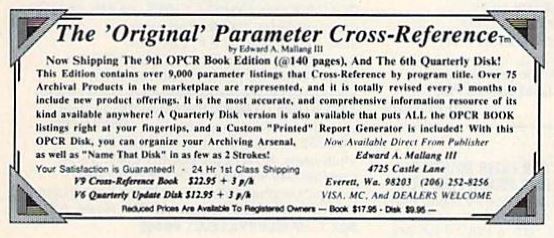
Before beginning this project, I read about the Original Parameter Cross Reference. The OPCR project began in 1987 by Edward Mallang III. The OPCR started out as a printed manual and later developed into C64 software. It listed all of the available games in alphabetical order and the commercial parameters capable of copying the software. Curious — and wanting to do things the right way — I tracked him down. After striking out with two outdated phone numbers, I finally reached him on the third number.
Edward's first reaction was complete amazement that someone would be reaching out after 36 years to speak about the C64 days. We ended up talking for about 90 minutes, covering everything from the early days of disk protection to the economics of the parameter business. Edward started the conversation by explaining that when someone purchased a Commodore 64 game, they had a legal right to make a backup. Publishers, of course, implemented copy protection to prevent that, while other companies sold tools specifically designed to bypass those protections. His project, which operated from 1987 to 1990, involved cataloging software titles alongside the commercially available parameters or copiers capable of producing working backups. The latest version I'd been able to locate was version 9, though he told me the series actually ran as high as "version 12 or 13."
When I asked whether the business had been profitable, he laughed it off. Printing manuals that ran up to 150 pages quickly ate into any potential gains. It was more a labor of love than a path to riches. He also mentioned a particularly clever detail — after other people began copying and reselling his hard-earned lists, Edward planted a few bogus entries — "peanuts," as he called them. These fake listings acted as markers. If they appeared in someone else's catalog (and they did), he knew exactly where the material had come from. On the advice of his legal representative, he put the 'peanut' papers in envelopes which were sealed. This could be used if the issue of ownership arose in legal proceedings.
Outside of his parameter work, Edward had a long career as a phone man with GTE, which eventually became part of Bell Atlantic and later Verizon. He traveled widely, installing FIOS systems at various facilities before retiring. He also shared the origin of his nickname, "Skip." If you pronounce his full name quickly, Edward Mallang the Third, it's an unflattering term.
In the end, he graciously granted me permission to use his parameter cross reference list. Using Python, I converted screenshots of commercial parameter programs to text and combined them with his list. The new list totals 1,923 game variants — some titles now have as many as six separate parameter programs. There are some name variations/duplicates.